
TOFU, MOFU, BOFU Explained Simply: The B2B Sales Funnel in 3 Stages

TOFU, MOFU, BOFU: these acronyms have probably crossed your LinkedIn feed or come up in a marketing meeting without anyone taking the time to actually explain them. Yet behind the slightly absurd jargon sits one of the most useful ideas in B2B marketing: knowing where a prospect is in their thinking, so you can speak to them the right way at the right time.
If you have ever pushed a sales offer on someone who wasn’t ready to hear it, or kept educating a prospect who was only waiting for a quote, this guide is for you.
Download our free guide “The Leads Machine”. The full funnel, stage by stage, with the concrete mechanics behind each level.
The sales funnel in one sentence
A sales funnel describes the path a prospect travels between the moment they discover you exist and the moment they become a customer. That path is traditionally split into three stages:
- TOFU (top of funnel): the top
- MOFU (middle of funnel): the middle
- BOFU (bottom of funnel): the bottom
Each stage matches a different mindset, and therefore a different kind of content. Get the stage wrong and you are talking about marriage to someone who just said hello.
TOFU: attract the right people
At the top of the funnel are people who don’t yet know they need you, or who are just starting to put a name on a problem. They are not looking for your product. They are looking for an answer to a question, a fix for a pain point, or simply some inspiration.
At this stage, effective content is educational, not promotional: blog posts, LinkedIn posts, explainer videos, free guides. The goal is not to sell. It is to be useful, visible and credible.
The average conversion rate at the TOFU stage is around 4.6%.
That may look low, but it is normal: most visitors at this stage are not ready to commit, and that is not the point. TOFU exists to build a qualified audience, not to sell right away. It is also the stage where targeting matters most. Source: Funnel.io, Understanding the TOFU, MOFU, BOFU funnel model
MOFU: qualify and nurture
Once a visitor shows a first sign of interest (downloading a guide, subscribing to a newsletter, coming back to a key page), they enter the middle of the funnel. This prospect now knows they have a problem and is starting to explore possible solutions, possibly including your competitors.
This stage runs on two complementary mechanics:
- qualification, through lead scoring, which assigns points based on the prospect’s profile and behavior;
- nurturing, gradual follow-up through email, targeted content and customer stories.
Done well, MOFU strategies reach a conversion rate of around 75% according to Funnel.io, far higher than at TOFU, precisely because the sorting has already happened upstream.
It is also the stage most often neglected for lack of process: many companies generate leads at TOFU, then let them go cold because there is no scoring and no structured nurturing sequence.
BOFU: close
At the bottom of the funnel are prospects who have clearly identified their need, compared options and are ready to decide. This is where sales teams take over: tailored demos, detailed case studies, customer testimonials, clear offers, handling the last objections.
Only 14% of marketers produce BOFU content, compared with 50% for TOFU.
Paradoxically, it is the stage with the least content coverage (in-depth case studies, comparisons, decision pages), even though it is exactly when well-designed content can tip a decision. Source: Funnel.io
The funnel in numbers: where you really lose prospects
The funnel in numbers
Put together, these numbers tell a clear story: most companies pour a lot of energy into TOFU (that is where the visibility, likes and views are), a bit less into MOFU, and very little into BOFU, even though that is often where the final buying decision is made.
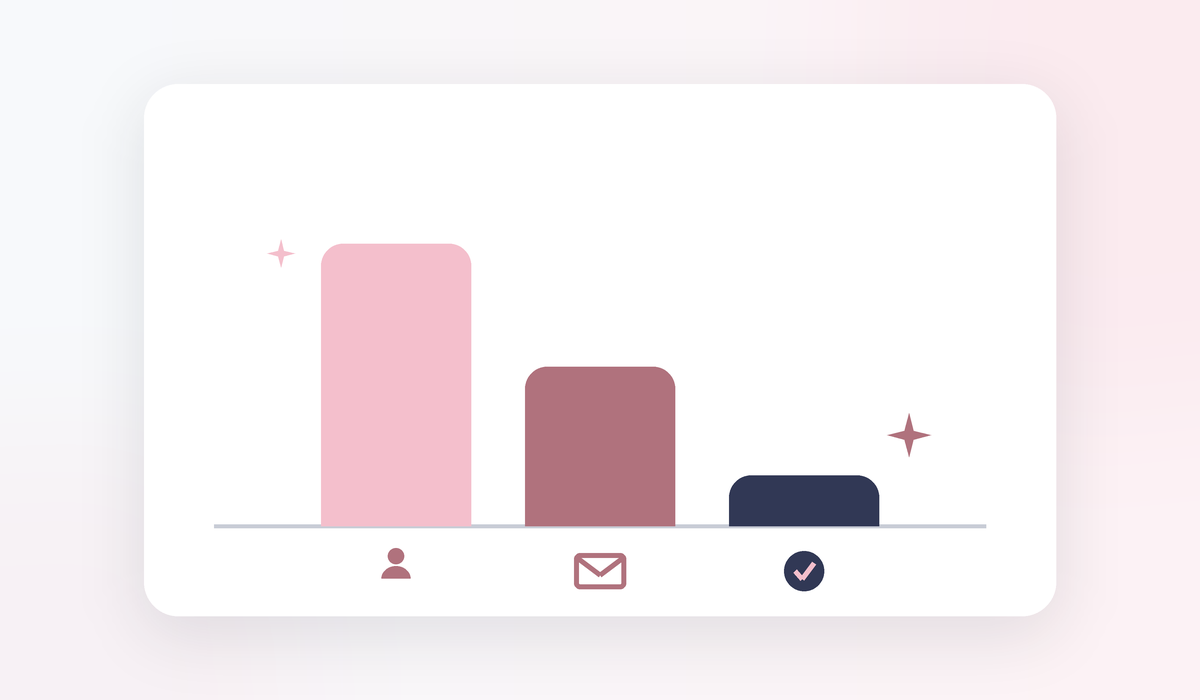
In practice, many companies attract people at the top of the funnel and then lose a large share of them along the way. Not because the offer stopped being relevant, but because nobody guided them between the first visit and the buying decision.
Structure all three stages of your funnel. Our guide details the TOFU targeting exercise, MOFU lead scoring thresholds and the BOFU closing sequence.
Why most companies neglect one stage
In our work with B2B SaaS companies, the most common imbalance looks like this:
- a marketing team that is very active on social media (strong TOFU);
- a CRM full of leads that never get followed up (weak MOFU);
- a sales team complaining about unqualified leads, because the sorting never happened.
This imbalance is almost never about lack of goodwill. It is about priorities and process. TOFU is visible and rewarding (views, likes and comments are instant). MOFU is invisible and methodical (building a scoring system and email sequences takes time with no immediate payoff). The result: teams invest where it feels rewarding, not necessarily where it pays off most.
How to put this funnel to work this week
- Take inventory of your content from the last three months and tag each piece as TOFU, MOFU or BOFU. You will probably find a clear skew toward one stage.
- Pick the weakest stage and create one piece of content to strengthen it this week: a customer case study if your BOFU is empty, a three-email sequence if your MOFU doesn’t exist.
- Connect your content: a TOFU article should invite readers to download a deeper MOFU resource (such as a complete guide), which in turn sets up a BOFU sales conversation.
That last point is probably the most important. A funnel that works is not a collection of standalone content. It is a marked path, where each stage leads naturally to the next.
Want the full picture of the funnel? “The Leads Machine” covers the whole system, with numbers and concrete examples at every stage.
About the author
Sonia Barbier is the founder of Sacrebleu Marketing and brings 20 years of international experience in B2B, SaaS and product marketing. She helps B2B companies turn their content into a driver of acquisition, nurturing and conversion.